Applied Mathematics Research Center of Sun Yat-sen University Institute of Advanced Studies Hong Kong Conducts Technical Exchange with Guangdong Provincial Communications Group to Explore Collaboration on Drone Applications and Low-Altitude Economy Develo
On February 5, 2026, the Applied Mathematics Research Center of Sun Yat-sen University Institute of Advanced Studies Hong Kong (hereinafter referred to as the “Math Center”) held a technical exchange meeting with Guangdong Provincial Communications Group (hereinafter referred to as the “Communications Group”) at Leung Kau-Kui Hall on the South Campus of Sun Yat-sen University in Guangzhou.
The two sides conducted in-depth discussions on innovative drone applications in intelligent transportation, focusing on pathways for technological breakthroughs, scenario implementation, and industrial collaboration in the development of the low-altitude economy, and reached preliminary consensus on future cooperation.
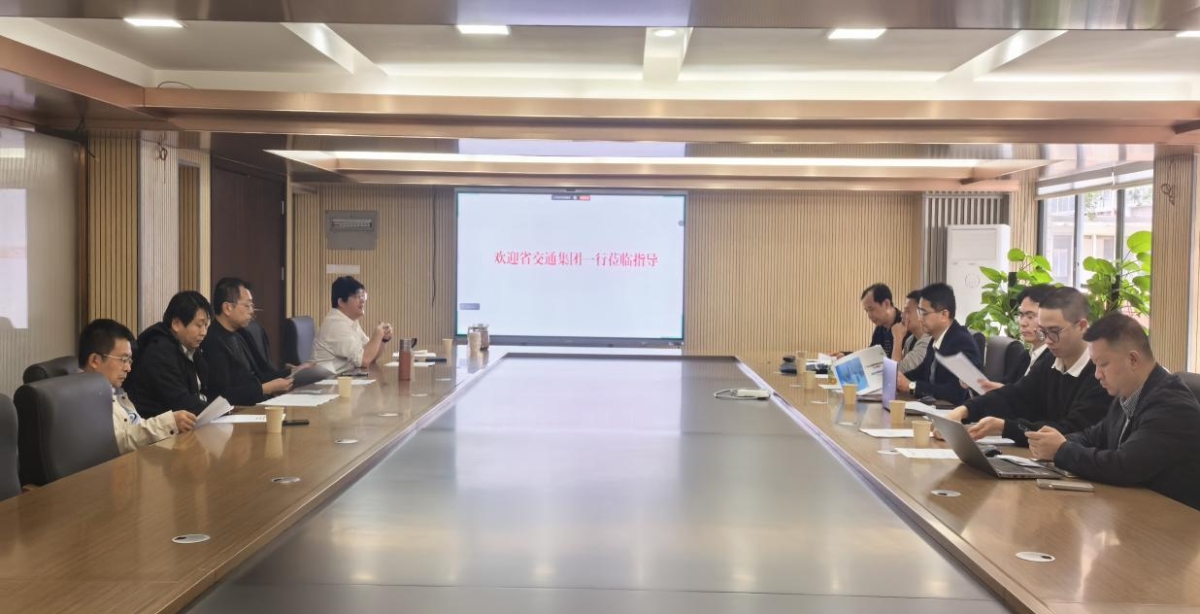
At the meeting, a multidisciplinary expert team led by Professor Yao Zheng’an, Director of the Center, systematically introduced the Center’s technological strengths and interdisciplinary advantages in the field of the low-altitude economy. Professor Yao highlighted the team’s breakthrough achievements in the National Key Research and Development Program of China: “Transformative Technologies Key Scientific Problems”, specifically the project titled Mathematical Modeling and Distributed Computing of Large-Scale Complex Dynamic Graphs for Route Planning. The team’s independently developed algorithm system has already reached an internationally advanced level. Professor Yao Qinghe and Associate Professor Pan Rong respectively presented frontier research directions including intelligent planning and simulation, low-altitude environmental perception modeling, and predictive traffic flow theory, comprehensively demonstrating a full research chain “from theoretical breakthroughs to scenario empowerment”.
Deputy Director Huang Qiang of the Information Center of the Communications Group, introduced the Group’s strategic planning, application scenarios, and research needs in the low-altitude economy sector. In response to national and provincial development strategies for the low-altitude economy, the Communications Group has identified drone applications as a key strategic task and aims to establish a unified flight service platform and large-scale operational system. Facing challenges including integrated airspace management, intelligent infrastructure, and unified data standards, the Communications Group expressed its intention to collaborate with leading research teams to tackle key technological issues and enhance safety, quality, efficiency, and cost reduction across the full lifecycle of expressway “construction, management, maintenance, operations, and services”.
The meeting focused on three major research directions. In the area of “Low-Altitude Intelligent Airspace Management Technology”, the Center will leverage its civil aviation-grade air route planning algorithms to support the development of a three-dimensional “digital brain” for airspace management. Regarding “Low-Altitude Traffic Management and Situational Awareness Technology”, both sides will jointly develop multi-source data fusion and real-time risk warning systems to establish an “intelligent neural hub” for operational management. For typical scenarios such as “Air-Ground Coordinated Emergency Rescue”, the collaboration will integrate frontier technological achievements to develop rapid-response and coordinated dispatch platforms, supporting the large-scale deployment of drone applications.
Through this exchange, both sides reached preliminary consensus on establishing a dedicated coordination mechanism, conducting field investigations, accurately identifying operational needs, and jointly advancing the implementation of collaborative research projects.